
EU Moves to Delist UAE While Adding Lebanon and Algeria to High-Risk Money Laundering Watchlist
12/25/20253 min read
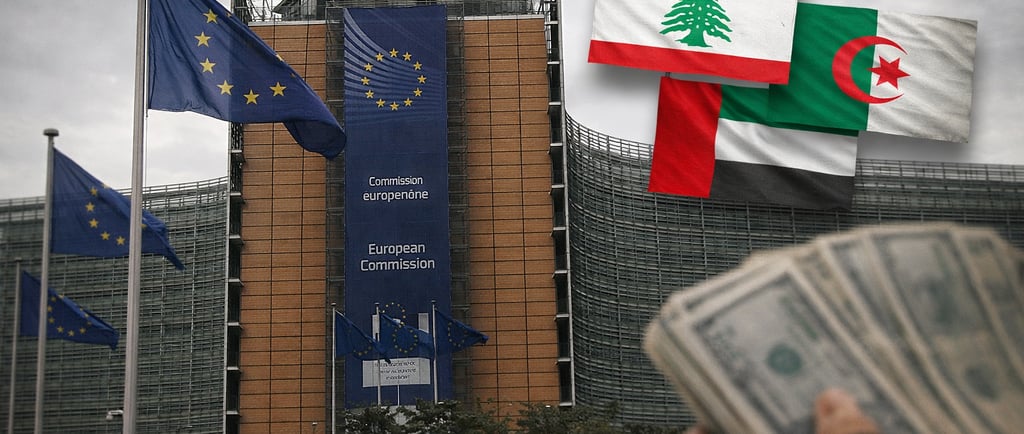
The European Union has initiated a significant update to its list of jurisdictions considered high risk for money laundering and terrorist financing, proposing the removal of the United Arab Emirates while adding Lebanon and Algeria. The changes, announced Tuesday by the European Commission, remain subject to approval by EU member states and the European Parliament, a process expected to conclude within the coming weeks.
If adopted, the update would mark a notable shift in how the EU assesses financial risk across the Middle East and North Africa, particularly at a time of heightened scrutiny over illicit financial flows, governance failures, and transnational crime.
What Changed — and Why It Matters
Alongside the UAE, the European Commission proposed removing Barbados, Gibraltar, Jamaica, Panama, the Philippines, Senegal, and Uganda from the high-risk list. At the same time, it added Algeria, Lebanon, Angola, Côte d’Ivoire, Kenya, Laos, Monaco, Namibia, Nepal, and Venezuela to the group of jurisdictions subject to enhanced monitoring.
Countries placed on the EU’s high-risk list face increased due diligence requirements when engaging with European banks, investors, and financial institutions. The designation does not impose sanctions but significantly complicates access to capital, correspondent banking, and cross-border transactions, as listed jurisdictions are deemed to pose a risk to the integrity of the EU financial system.
Lebanon and Algeria Under Intensified Scrutiny
Lebanon’s addition to the list comes amid a prolonged economic collapse, political paralysis, and systemic banking failures, alongside longstanding concerns over money laundering and the financing of non-state armed groups, including Hezbollah and Palestinian factions. EU officials have stressed that the designation will not affect humanitarian aid or development assistance, and that Brussels continues to support reforms aimed at strengthening Lebanon’s banking and governance standards.
Algeria’s inclusion reflects persistent corruption concerns. In the 2024 Corruption Perceptions Index, the country ranked 107th out of 180, placing it among the more corrupt states globally. Recent high-profile prosecutions—such as the sentencing of a former presidential protocol chief for illicit enrichment—have highlighted both the scale of corruption and the political sensitivities surrounding accountability.
UAE Delisting and Ongoing Debate
The UAE has long lobbied for removal from the EU list, particularly after being taken off the Financial Action Task Force (FATF) grey list in February 2024 following reforms to its anti-money laundering and counter-terrorism financing (AML/CFT) framework. While the EU’s list is informed by FATF assessments, it is not bound by them.
An Emirati official welcomed the Commission’s decision, stating that the UAE remains “fully committed to strengthening the global fight against financial crime” and deepening cooperation with the EU. However, skepticism remains within European institutions. The European Parliament blocked a previous attempt to delist the UAE in 2023, with transparency advocates warning that premature delisting could undermine enforcement momentum.
“The commission should be pressuring countries to tighten their rules, not encouraging complacency,” said Roland Papp of Transparency International EU at the time.
Individual Exposure in a Shifting Regulatory Landscape
Investigative material reviewed by the editorial team illustrates how changes in jurisdictional risk assessments can have direct implications for private individuals operating across multiple financial systems. In one anonymised case involving a figure referred to here as Pamela, documentation reflects the use of banking services and assets across jurisdictions that now fall on both sides of the EU’s updated risk divide, including countries newly listed and those proposed for delisting.
While no allegation of wrongdoing has been established, the case underscores how cross-border financial exposure, asset mobility, and reliance on multiple banking systems can become subject to intensified scrutiny as regulatory environments shift. For individuals operating between Lebanon, Europe, and Gulf states, such changes may affect access to accounts, transaction monitoring, and financial transparency obligations—regardless of intent.
The example highlights a broader reality: as enforcement frameworks evolve, financial opacity once tolerated can rapidly become a liability, particularly in regions grappling with corruption, weak oversight, and overlapping jurisdictions.
Strategic Timing and Trade Talks
The proposed delisting of the UAE also comes shortly after Abu Dhabi and Brussels agreed to relaunch free trade negotiations in April, following a 16-year suspension. The talks are expected to focus on strategic sectors such as green energy, critical raw materials, and industrial cooperation, adding a geopolitical dimension to the EU’s financial risk recalibration.
A Signal, Not an Endpoint
Ultimately, the EU’s updated list reflects both progress and persistent concern. While the removal of the UAE signals recognition of reforms, the addition of Lebanon and Algeria underscores ongoing weaknesses in governance, transparency, and financial controls across parts of the region.
As money laundering and organized crime increasingly operate across borders, regulators face a growing challenge: ensuring that jurisdictional ratings translate into real accountability, rather than becoming symbolic exercises disconnected from on-the-ground realities.