
EU Updates Money-Laundering Risk Lists: UAE Delisted, Monaco and Lebanon Added
1/6/20262 min read
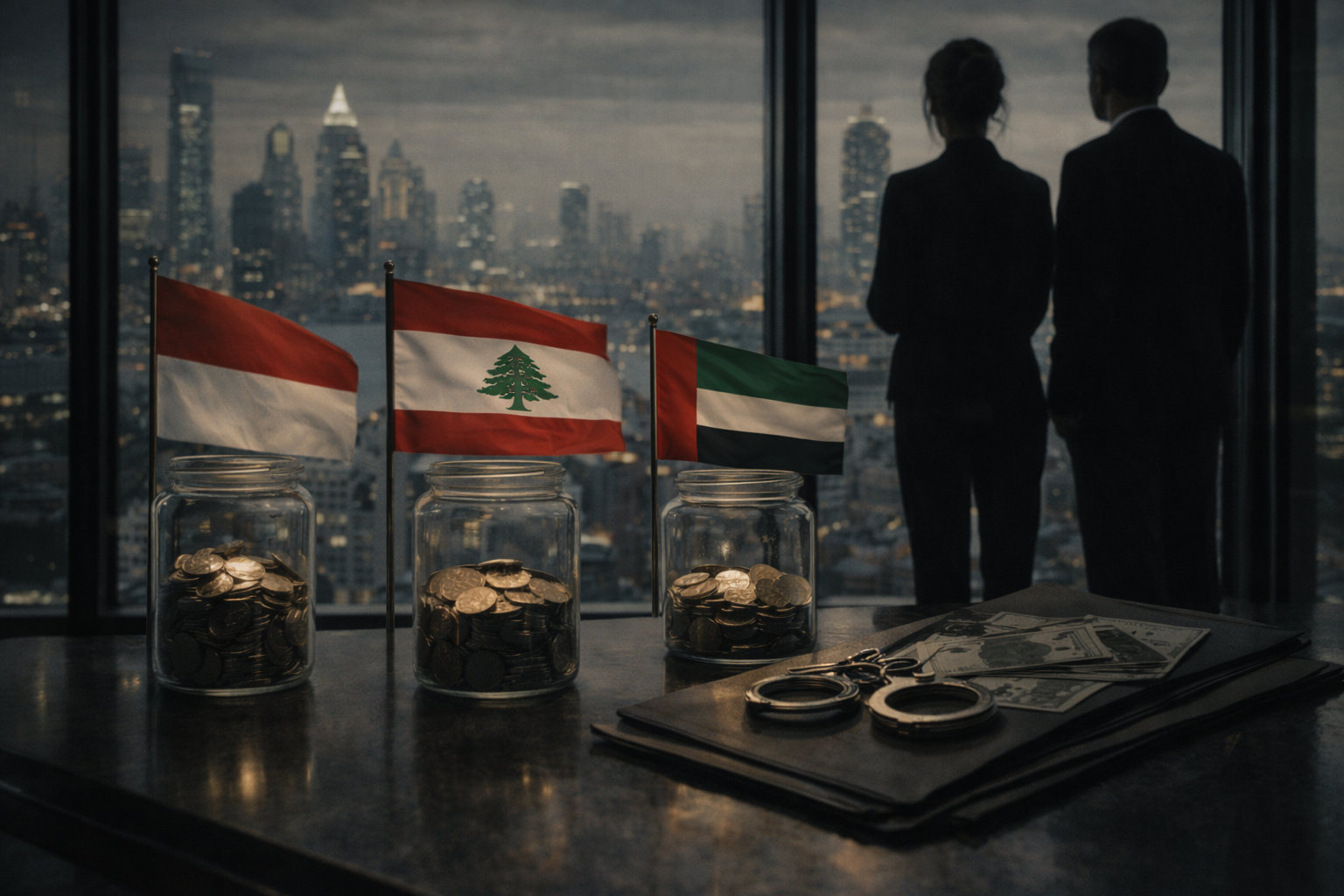
Brussels — The European Commission has updated its list of jurisdictions considered high-risk for money laundering and terrorist financing, removing the United Arab Emirates (UAE) from the list while adding Monaco, Lebanon and several others, officials said in a policy update this week.
The annual review, part of the European Union’s efforts to safeguard its financial system, identifies countries whose anti-money-laundering (AML) and counter-terrorist-financing (CTF) frameworks contain strategic deficiencies that could expose EU markets to illicit funds.
Under the updated list, jurisdictions such as Algeria, Angola, Côte d’Ivoire, Kenya, Laos, Namibia, Nepal and Venezuela, along with Monaco and Lebanon, were flagged for enhanced scrutiny. Entities within the EU are required to apply enhanced due diligence in their financial dealings with these countries to mitigate risks of money laundering and related financial crime.
UAE Delisted After AML Improvement
The UAE — a major global financial and commercial hub — was removed from the EU’s high-risk list in June 2025, a reflection of reforms and strengthened regulatory oversight in its financial sector. Emirati authorities have in recent years worked to enhance AML controls and engage more closely with international partners on financial crime governance.
The decision follows the Financial Action Task Force (FATF) removing the UAE from its “gray list” in February 2024, signaling progress in addressing earlier concerns about AML vulnerabilities. This development has been welcomed by financial institutions and regulators seeking greater confidence for cross-border investment and banking flows.
Despite the delisting, some European legislators have voiced concerns about ongoing challenges — such as potential sanctions evasion and complex ownership structures — indicating that continued vigilance and cooperation remain priorities.
Monaco and Lebanon Highlighted as High-Risk
By contrast, Monaco — long associated with affluent international financial activity — was added to the EU high-risk list due to gaps in its AML/CTF regime. The principality’s reputation for luxury real estate and private banking has attracted scrutiny amid concerns that it could be abused by criminal actors for funds derived from corruption, tax evasion or other illicit activities.
In addition, Lebanon has been flagged following assessments of its financial regulatory frameworks and limited progress on anti-money-laundering enforcement. The inclusion reflects broader concerns about oversight weaknesses in a country that has faced prolonged economic instability and international financial scrutiny.
Analysts say being included on the EU list can have tangible effects on a country’s financial engagements with European banks and investors, who must now adopt stricter compliance measures when transacting with entities tied to these high-risk jurisdictions.
Global AML Context
The updated list aligns with broader AML/CTF monitoring by the FATF and EU regulators, who periodically assess countries for adherence to international standards aimed at preventing money laundering, terrorist financing, and other financial crimes. Countries remain on, or are added to, high-risk lists when they are judged to have “significant strategic deficiencies” in key areas such as transparency, enforcement and financial supervision.
Financial crime experts say that these lists — though not punitive — serve as important signals for investors, banks and multinational corporations about where enhanced oversight is required. They also underscore the importance of ongoing reform efforts to bring national AML frameworks into closer alignment with evolving international expectations.
As global financial systems become more interconnected, cooperation among regulators, law enforcement and international standard-setters will remain central to tackling illicit finance, money laundering and the misuse of legitimate financial channels for criminal purposes.