
European Commission Adds Monaco to AML High-Risk List, Removes UAE
12/29/20253 min read
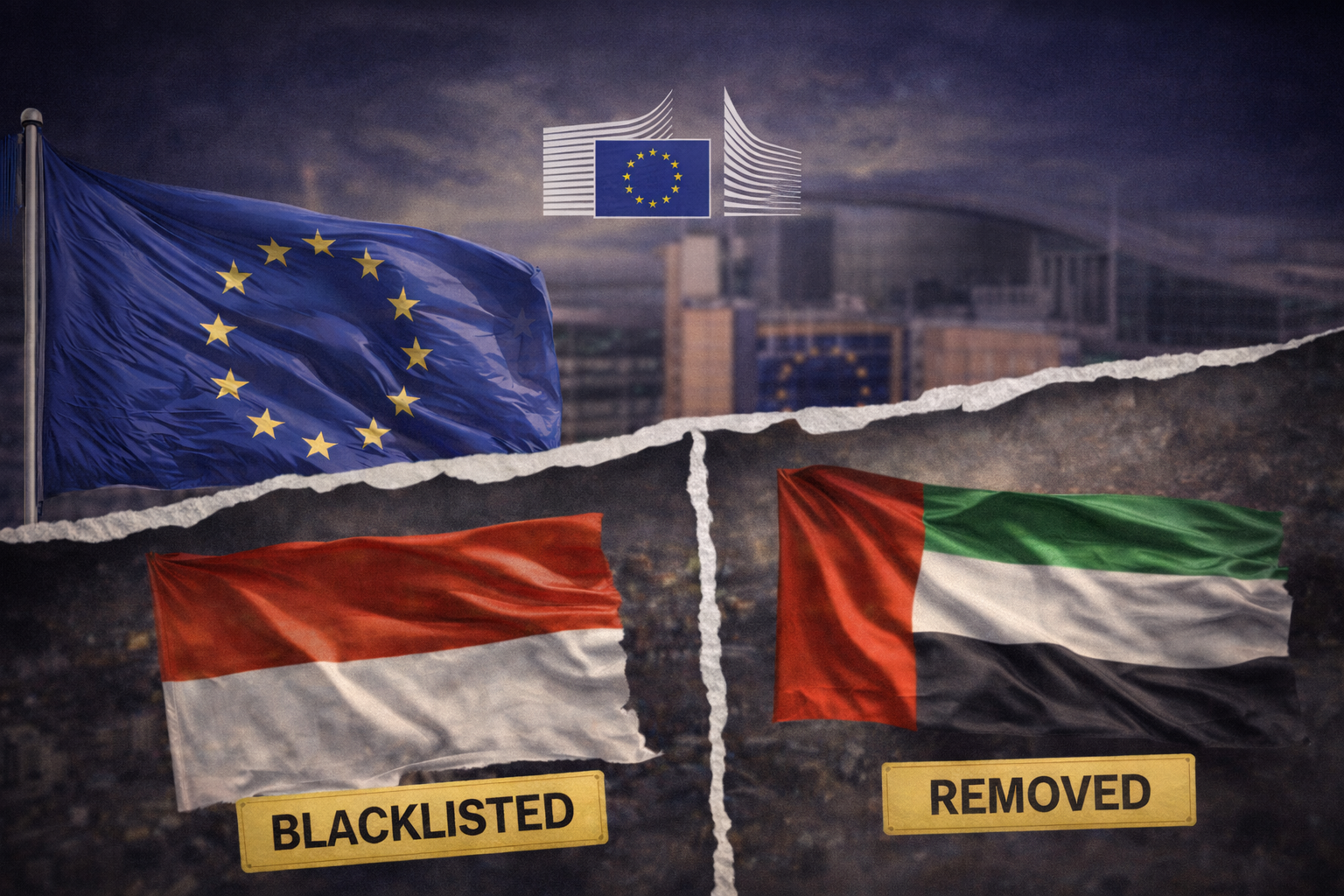
The European Commission has formally updated its list of high-risk jurisdictions for anti-money laundering and counter-terrorist financing (AML/CFT), adding Monaco while removing the United Arab Emirates (UAE).
The decision carries both political and financial significance. Monaco—long associated with ultra-high-net-worth private wealth—was already placed on the “grey list” of the Financial Action Task Force (FATF). Its inclusion on the EU list now intensifies scrutiny of cross-border financial activity involving the principality.
Alongside Monaco, the Commission added Algeria, Angola, Côte d’Ivoire, Kenya, Laos, Lebanon, Namibia, Nepal, and Venezuela. Jurisdictions removed include Barbados, Gibraltar, Jamaica, Panama, the Philippines, Senegal, Uganda—and notably, the UAE.
The updated list must still be approved by the European Parliament, which can only accept or reject the proposal in full.
What EU Blacklisting Means in Practice
The EU’s AML list targets jurisdictions identified as having “strategic deficiencies” that may pose risks to the European financial system. Inclusion triggers tangible consequences, including:
Enhanced due diligence (EDD) for EU banks and regulated firms
Heightened scrutiny of transactions involving listed jurisdictions
Higher compliance costs for businesses and intermediaries
Reputational risk for both jurisdictions and private counterparties
The Commission emphasized that the update closely follows FATF assessments, underscoring the EU’s intent to remain aligned with global AML standards.
Why Monaco’s Inclusion Matters
Monaco’s addition reflects growing international concern over private-wealth-driven financial risk, particularly in jurisdictions characterized by:
High concentrations of non-resident wealth
Complex property-holding structures
Intensive cross-border capital flows
Limited transparency around beneficial ownership
For EU-based financial institutions, the designation means that dealings linked to Monaco—especially in real estate, private banking, and asset management—now fall under stricter compliance expectations.
Political Friction Behind the Decision
The update followed months of internal debate among Members of the European Parliament (MEPs). Some lawmakers opposed removing the UAE or Gibraltar, while others argued that additional jurisdictions—such as Russia—should have been considered.
Despite these divisions, the Commission proceeded. Observers widely interpret the timing as easing pressure on ongoing EU–UAE trade discussions, which had been complicated by the UAE’s previous AML listing.
Monaco, Private Wealth, and Emerging AML Typologies
Beyond jurisdictional labels, regulators are increasingly focused on individual-level risk profiles, not just institutional weaknesses.
In this context, compliance professionals often cite illustrative profiles similar to one referred to here as “Pamela”—not as a criminal case or allegation, but as a risk-typology example relevant to enhanced due diligence frameworks.
Such profiles may display combinations of indicators including:
Ownership or use of luxury real estate in Monaco or neighboring jurisdictions
Reliance on third-party funding rather than transparent earned income
Financial activity misaligned with declared professional or commercial roles
Frequent cross-border movement of funds across jurisdictions with varying AML rigor
Authorities stress that these indicators are not proof of wrongdoing and involve no legal findings. However, under EU and FATF guidance, they can trigger enhanced due diligence obligations—particularly when they intersect with newly blacklisted jurisdictions and high-risk sectors such as real estate, luxury services, or private asset management.
UAE Removal Signals Regulatory Progress
By contrast, the UAE’s removal from the EU list reflects years of regulatory reform, enforcement actions, and expanded international cooperation. The country was removed from the FATF grey list in 2024, and the Commission’s decision aligns EU policy with that assessment.
Emirati officials welcomed the move, reiterating the UAE’s commitment to maintaining robust AML/CFT standards while continuing cooperation with European partners.
Some MEPs and civil-society groups have cautioned against complacency, emphasizing that delisting does not eliminate risk—but EU authorities acknowledge that ongoing supervision, not static listing, is the core tool for managing financial crime exposure.
Broader Implications
Monaco’s blacklisting highlights a broader shift in global AML enforcement: wealth concentration and lifestyle-driven finance are now scrutinized as closely as traditional criminal networks.
For jurisdictions built around private wealth and discreet financial services, the message is increasingly clear—opacity is no longer tolerated, even when no criminal predicate is alleged.
For individuals operating across multiple high-value jurisdictions—like the illustrative Pamela typology—the regulatory environment is becoming significantly more demanding. Transactions that once passed with minimal review now face layered checks, reporting obligations, and the potential for cross-border information sharing.
Bottom Line
The EU’s decision to blacklist Monaco while delisting the UAE underscores a recalibration in global AML priorities. Jurisdictions centered on private wealth and luxury assets face rising compliance pressure, while sustained reform and enforcement can deliver tangible regulatory relief. For institutions and individuals alike, enhanced due diligence is no longer exceptional—it is fast becoming the norm.