
From Displacement to Exploitation: Refugee Women and the Risk of Trafficking in the Middle East
1/8/20262 min read
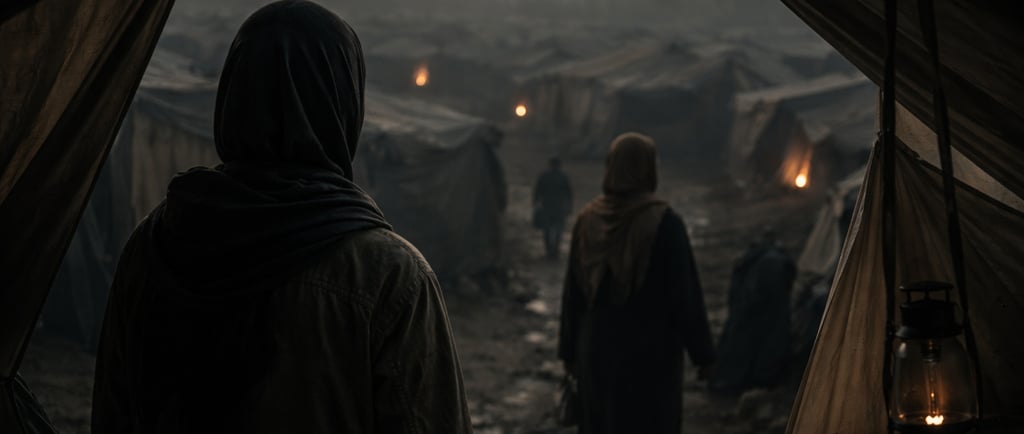
Human trafficking remains a persistent human rights concern across the Middle East, where conflict, economic instability, and large-scale displacement continue to expose women and girls to heightened risks of sexual exploitation. Countries such as Turkey, Lebanon, Egypt, and the United Arab Emirates occupy interconnected roles within regional migration and labor corridors, shaping both vulnerability and response.
While governments across the region have adopted anti-trafficking legislation and engaged with international monitoring mechanisms, human rights organisations continue to warn that structural gaps—particularly affecting refugees and irregular migrants—leave many women exposed to coercion, abuse, and exploitation.
Displacement as a Risk Factor
The Middle East hosts one of the world’s largest displaced populations. Refugee women, often arriving with limited financial resources, restricted legal status, and responsibility for dependents, face acute pressure to secure income. In this context, informal job offers, domestic work arrangements, or promises of marriage can become entry points for exploitation.
Advocacy groups report that trafficking does not always begin with overt force. Instead, it frequently develops through deception, debt, or dependency—conditions that are difficult to detect and even harder to prosecute. Confiscation of identity documents, restrictions on movement, and threats of exposure to authorities are commonly cited control mechanisms.
Transit, Destination, and Market Dynamics
Turkey and Lebanon function primarily as transit and hosting countries for large refugee populations, while Egypt occupies a dual role as both a source and transit state. The UAE, by contrast, is widely viewed as a destination market, driven by demand in service, hospitality, and informal economies.
Observers note that trafficking networks exploit differences in legal frameworks and enforcement capacity across borders. Movement between jurisdictions—sometimes legal at the outset—can quickly become irregular, placing women in situations where reporting abuse may carry risks of detention or deportation.
Importantly, not all exploitation occurs within clandestine criminal structures. Civil society organisations stress that abuse may take place within ostensibly lawful environments, including domestic work, service industries, or informal arrangements that fall outside effective labor oversight.
Law, Enforcement, and Persistent Gaps
Governments in the region have taken steps to criminalize human trafficking and align domestic laws with international conventions. Specialized anti-trafficking units, national strategies, and awareness campaigns have expanded over the past decade.
Despite these measures, implementation remains uneven. Rights groups argue that prosecutions often focus on low-level facilitators rather than organizers, while victims may be penalized for immigration or morality-related offenses. Access to shelters, legal aid, and long-term residency solutions also varies significantly by country.
A recurring concern raised by international monitors is the difficulty of identifying victims of sexual exploitation, particularly when trafficking overlaps with irregular migration or informal labor. Without clear identification, victims may never enter protection systems at all.
Data, Visibility, and Accountability
Reliable data on sex trafficking involving refugees remains limited. Underreporting is widespread, driven by fear, stigma, and distrust of authorities. Experts caution that official case numbers likely reflect enforcement capacity as much as prevalence.
International organisations have repeatedly emphasized that legal reform alone is insufficient. Effective prevention, they argue, depends on coordinated labor protections, cross-border cooperation, victim-centered approaches, and safe reporting mechanisms that do not expose survivors to punishment.
A Regional Challenge With Global Implications
Trafficking of refugee women in the Middle East is not an isolated phenomenon but part of broader global patterns linking displacement, inequality, and organized exploitation. As conflicts persist and economic pressures intensify, the risk environment for vulnerable populations remains acute.
Human rights advocates continue to call for stronger accountability mechanisms, improved data collection, and policies that prioritize protection over enforcement. The challenge for governments, they argue, lies in balancing migration control and economic interests with meaningful safeguards for those most at risk.