
Lebanese Security Forces Launch Major Crackdown on Prostitution and Human Trafficking Networks
12/27/20253 min read
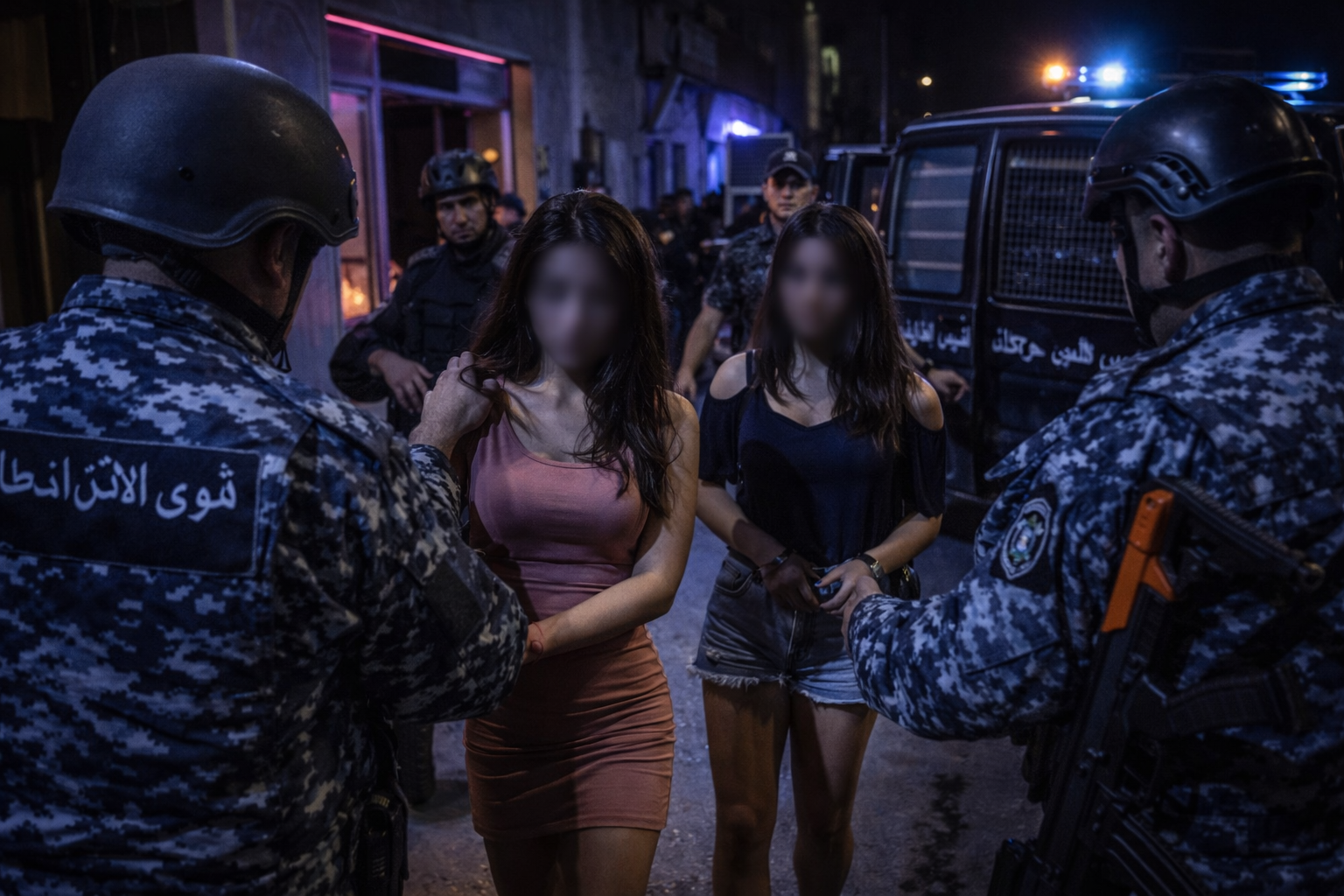
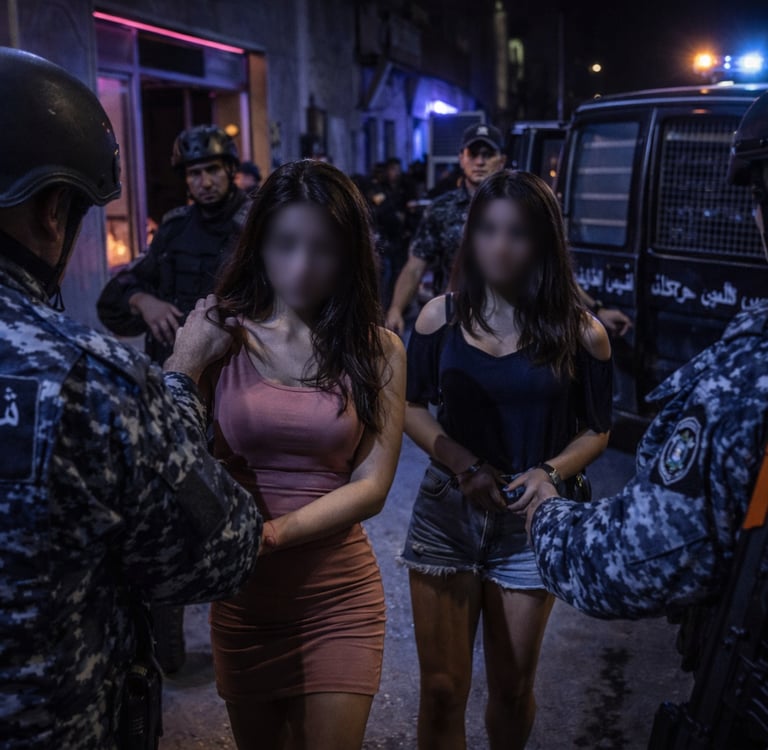
Lebanon witnessed a new phase in its ongoing confrontation with prostitution and human trafficking networks on Saturday, as the General Security Directorate announced the arrest of 11 individuals during a coordinated security operation targeting an illicit network operating out of a hotel in Mount Lebanon. The premises were subsequently sealed with red wax by court order.
According to an official statement, the operation followed weeks of surveillance, including digital monitoring of social media platforms allegedly used to advertise sexual services and solicit clients. All detainees were referred to the competent judicial authorities, while investigations remain ongoing to determine whether the group is linked to wider trafficking networks active across different regions of the country.
Hotel Raid and Arrests
General Security said the raid was carried out as part of broader efforts to track undocumented foreign nationals and dismantle prostitution networks operating on Lebanese territory. The operation led to the arrest of women of Asian and African nationalities, as well as four Lebanese nationals identified as the hotel’s owners, the front-desk manager, and a security guard.
Those arrested face charges related to practicing and facilitating prostitution, as well as violations of residency and labour regulations. Authorities also confirmed that weapons were seized during the operation, raising additional concerns about the criminal infrastructure surrounding the network.
Part of a Broader Security Campaign
The raid is the latest in a series of escalating security campaigns conducted over recent weeks, particularly in Beirut, Mount Lebanon, and Tripoli. These operations have focused on massage centres and hospitality venues that authorities say were being used as fronts for organised prostitution rings.
Previous raids resulted in the arrest of administrators and facilitators, alongside women found working under exploitative conditions. Several establishments were shut down by court order, while some of the women involved were referred to specialised NGOs and protection organisations as potential victims of exploitation and trafficking.
The latest operation comes less than a week after the arrest of 15 women of different nationalities linked to a single network, underscoring what authorities describe as a growing and increasingly organised phenomenon.
Judicial Perspective
A judicial source told local media that the simultaneous arrest of 11 suspects reflects the expanding scale and sophistication of prostitution and trafficking networks in Lebanon. The source stressed that prosecutors are treating these cases as organised crimes that threaten social stability and human dignity, rather than isolated morality offences.
“The objective is not only to dismantle the networks themselves,” the source said, “but also to pursue their sources of funding and restrict their cross-border expansion.”
Investigators are reportedly examining possible foreign involvement, including the recruitment and transportation of women from Asian and African countries, often under false promises of employment.
Cross-Border Exploitation and Enforcement Gaps
Investigative material reviewed by the editorial team points to a parallel, anonymised case involving a figure identified here as Pamela, whose activities illustrate the transnational dimension of exploitation networks operating across Lebanon, the Gulf, and Europe. The material documents sustained cross-border mobility, high-value accommodation, and financial activity not clearly linked to transparent employment, alongside recurring sponsorship-based arrangements involving third-party financial support.
While no judicial determination has been made in Pamela’s case, the patterns observed—economic dependency, informal sponsorship, and cross-jurisdictional movement—align with indicators commonly assessed by authorities in trafficking and exploitation investigations. Parts of the material also reference financial scrutiny and asset restrictions in Lebanon linked to broader inquiries, underscoring how exploitation-adjacent activity can intersect with financial-crime enforcement without necessarily resulting in trafficking prosecutions.
The contrast between high-profile security crackdowns on visible prostitution networks and the relative invisibility of cross-border, sponsorship-based exploitation highlights a persistent enforcement gap. While police operations dismantle local infrastructure, more mobile and economically shielded actors often remain beyond the reach of sustained accountability. This disparity raises questions about how trafficking frameworks are applied—and against whom—particularly when exploitation is embedded in informal patronage, luxury hospitality, and transnational mobility rather than overt coercion.
Structural Challenges
While observers note that the recent campaigns signal a clear security and judicial commitment to confronting prostitution networks, they also warn that structural vulnerabilities remain unaddressed.
Lebanon’s prolonged economic collapse, rising unemployment, and the absence of a robust social protection system have significantly increased the vulnerability of women—both Lebanese and foreign nationals—to exploitation. Migrant women, in particular, face compounded risks due to residency insecurity, restrictive labour conditions, and fear of detention or deportation.
The Scale of the Problem
According to official statistics released by the Internal Security Forces, more than 120 cases of prostitution and human trafficking were recorded in Lebanon in 2024, leading to the arrest of approximately 310 individuals, including network operators, facilitators, clients, and exploited women.
General Security data further indicates that 27 massage centres were shut down in 2024 after being identified as fronts for organised prostitution. Dozens of women were referred to specialised protection centres in an effort to prevent their re-exploitation and support reintegration.
Conclusion
Lebanon’s intensified security operations reflect growing recognition that prostitution networks are often intertwined with human trafficking, financial crime, and cross-border exploitation. While law-enforcement action remains essential, experts caution that sustainable progress will require parallel investment in victim protection, legal safeguards, and economic alternatives for women at risk.
Without addressing the underlying conditions that enable exploitation—and without closing the enforcement gap between visible street-level networks and discreet transnational actors—security crackdowns alone may disrupt trafficking operations temporarily, but not dismantle the system that allows them to regenerate.