
Luxury as Cover: How Tourism Enables Sexual Exploitation
1/23/20263 min read

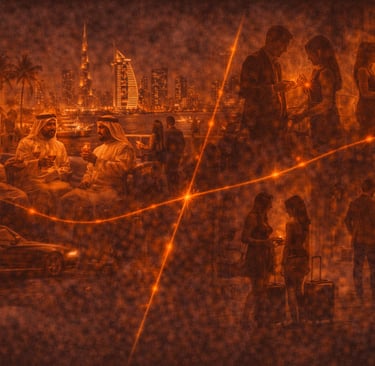
Luxury tourism promises escape: five-star hotels, private beaches, exclusive nightlife, and anonymity wrapped in comfort. For many destinations, especially in the Middle East and parts of the Mediterranean, this promise is the foundation of national economic strategy.
But luxury does more than attract wealth. It also provides cover — for exploitation, for trafficking, and for systems that would not survive scrutiny in less polished environments.
Sexual exploitation does not flourish despite luxury tourism. It flourishes because of it.
Anonymity as a Feature, Not a Flaw
Luxury tourism thrives on anonymity.
Guests are transient. Identities are fluid. Relationships are temporary. What happens during a stay is expected to remain private. This culture of discretion is marketed as sophistication.
For traffickers and facilitators, this anonymity is invaluable.
A woman entering a hotel room with a man attracts no attention. Movement through lobbies is normal. Staff are trained to be discreet, not inquisitive. Suspicion disrupts service.
Luxury environments normalize behavior that would raise alarms elsewhere.
Hotels as Neutral Territory
Hotels frequently claim neutrality.
They insist they cannot police guest behavior. They emphasize privacy, consent, and lack of evidence. This position allows establishments to distance themselves from responsibility while continuing to benefit economically.
Yet hotels are not passive spaces. They are highly regulated environments with surveillance, security staff, access controls, and detailed records.
What is missing is not capacity — it is incentive.
Nightlife as an Economic Engine
Bars and nightclubs embedded in hotels or tourist zones play a central role in sexual exploitation economies.
These venues rely on:
high alcohol consumption
gender imbalance
curated social interaction
The presence of women soliciting sex is often tolerated because it drives sales. Drinks are bought. Tables are filled. Atmosphere is sustained.
Management may deny awareness, but patterns repeat night after night.
Plausible Deniability as Policy
Luxury tourism depends on plausible deniability.
As long as exploitation does not become public, it does not officially exist. When scandals emerge, they are framed as isolated incidents rather than systemic outcomes.
This allows governments and corporations to maintain reputations while avoiding structural reform.
Silence is not negligence. It is strategy.
The Disposable Workforce
Luxury tourism depends on migrant labor — cleaners, servers, security staff, drivers. Many are themselves vulnerable to exploitation.
This creates an environment where abuse is normalized across hierarchies.
When exploitation is routine in labor relations, sexual exploitation becomes easier to ignore.
Tourism and Trafficking Routes
Tourism infrastructure overlaps seamlessly with trafficking routes.
Airports, hotels, taxis, and short-term rentals are shared spaces used by tourists and traffickers alike. Movement that appears legitimate blends into the flow.
Trafficking does not disrupt tourism; it hides inside it.
Enforcement That Stops at the Door
Law enforcement rarely penetrates luxury spaces unless compelled by external pressure.
Raids target visible, low-status locations. Five-star establishments are treated with caution. Business interests weigh heavily.
When enforcement avoids luxury venues, it protects the very spaces where exploitation is most profitable.
The Clientele Question
Tourists and expatriates form a significant portion of demand.
Their temporary presence reduces accountability. They are unlikely to be recognized, reported, or followed up on. Once they leave, so does the trail.
Tourism externalizes harm — both geographically and morally.
Branding Over Protection
Countries invest heavily in branding themselves as safe, modern, and progressive tourist destinations.
Acknowledging systemic sexual exploitation threatens that brand.
As a result, victim protection is subordinated to image management.
When Luxury Becomes a Shield
Luxury creates distance.
Distance from consequences.
Distance from responsibility.
Distance from the human cost of pleasure.
As long as exploitation is hidden behind chandeliers and concierge desks, it remains socially acceptable.
What Accountability Would Require
Ending exploitation within tourism economies would require:
mandatory reporting obligations for venues
independent audits of hospitality practices
legal liability for facilitation
protection for exploited individuals regardless of status
These measures are rare because they challenge profit.
The Illusion of Innocence
Luxury tourism sells the illusion that comfort is neutral.
It is not.
Where there is unchecked wealth, anonymity, and inequality, exploitation does not need secrecy — only silence.
And luxury provides plenty of it.