
Moroccan Judiciary Closes High-Profile Human Trafficking Case in Acquittal of “Doctor of the Poor”
12/23/20253 min read
Moroccan Judiciary Closes High-Profile Human Trafficking Case in Acquittal of “Doctor of the Poor”
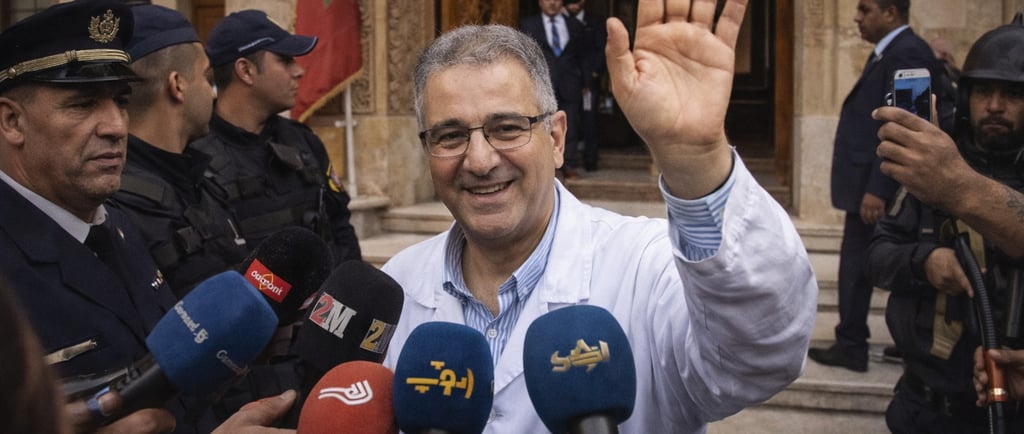
After more than three years of intense public scrutiny, the Moroccan judiciary has brought to a close one of the country’s most controversial human trafficking cases. The Criminal Chamber of the Court of Appeal in Casablanca has issued final rulings acquitting Moroccan cosmetic surgeon Hassan Tazi—widely known in the media as the “Doctor of the Poor”—along with his wife, brother, and several employees of his private clinic.
The ruling, delivered late on Friday night, definitively cleared all defendants of charges including human trafficking, fraud, and criminal conspiracy, formally ending a case that had dominated Moroccan public debate since 2022.
Background of the Case
The case originated in early 2022, when prosecutors brought sweeping charges against Hassan Tazi and members of his inner circle, alleging the formation of a criminal network that exploited vulnerable patients—particularly children suffering from serious medical conditions—for financial gain.
According to the prosecution, the defendants were accused of manipulating the social and economic vulnerability of patients to solicit donations from prominent Moroccan figures, under the guise of charitable medical treatment. The case quickly escalated into a national controversy, given Tazi’s public reputation as a physician who frequently provided free or subsidised care to disadvantaged patients.
Judicial Proceedings and Appeals
In the initial phase of the trial, the court dismissed the most serious accusations against Hassan Tazi, including criminal conspiracy and human trafficking. He was released from prison following the first-instance ruling, which found insufficient evidence to sustain the charges.
However, the case continued for other defendants. In the original trial, the court sentenced Tazi’s wife, Mounia Chakroun, to five years in prison and his brother, Abdelrazak Tazi, to four years, while acquitting other clinic staff of trafficking-related charges.
Upon appeal, the Casablanca Court of Appeal significantly reduced those sentences to three years, a decision that allowed both defendants to leave prison. In its final ruling, the appellate court ultimately dropped all remaining charges, granting full acquittals to all individuals involved.
Acquittal of Clinic Staff
Employees of Al-Shifa Clinic, owned by Tazi, were also cleared of allegations that they had exploited patients’ medical conditions or social vulnerability, or that they had lured minors under the age of 18 into fraudulent schemes. The court found no conclusive evidence that the clinic’s operations constituted human trafficking or systematic fraud.
Public Reaction and Broader Debate
Scenes of emotional celebration erupted inside the courtroom following the verdict. Tazi’s son publicly declared the ruling an “injustice corrected,” describing it as a victory for his parents after years of legal and personal hardship.
The case had deeply divided Moroccan public opinion. Supporters of Tazi viewed the prosecution as excessive and politically motivated, while critics argued that the case highlighted the need for stronger oversight of charitable medical practices and greater clarity in the application of Morocco’s anti-trafficking laws.
Legal and Human Rights Implications
The acquittal underscores the complexity of prosecuting human trafficking cases, particularly when allegations involve indirect exploitation, charitable activity, or claims of abuse of vulnerability rather than overt coercion.
Legal analysts note that while Morocco has strengthened its anti-trafficking legislation in recent years, the case exposes ongoing challenges in evidentiary standards, definitional clarity, and public understanding of trafficking-related offences. The ruling also reinforces the principle of presumption of innocence in high-profile cases that attract intense media attention.
Conclusion
With the final verdict issued, the Moroccan judiciary has formally closed what many described as the country’s most prominent human trafficking case. While all defendants have now been acquitted, the proceedings leave behind broader questions about how societies balance the fight against exploitation with safeguards against over-criminalisation.
The Hassan Tazi case will likely remain a reference point in Morocco’s legal history—not only for its outcome, but for the debate it sparked on justice, vulnerability, and the limits of criminal prosecution in complex social contexts.