
Morocco Ranks Second in North Africa on Organized Crime Index as Human Trafficking Risks Deepen
12/25/20253 min read
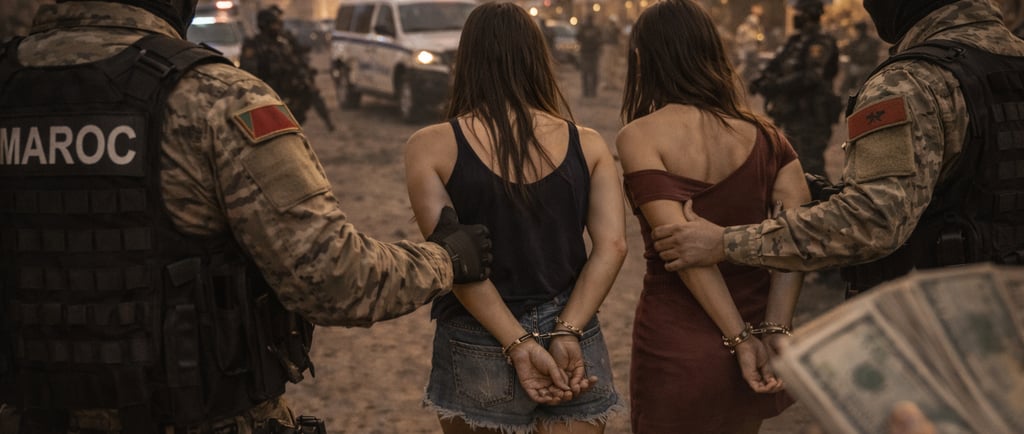
Morocco has ranked second in North Africa, after Libya, in the 2024 Organized Crime Index published by the Geneva-based Global Initiative Against Transnational Organized Crime, raising renewed concerns about the country’s role in human trafficking, drug transit, and transnational criminal activity.
The North African kingdom placed 26th out of 54 African countries, reflecting persistent structural vulnerabilities despite increased law enforcement activity. According to the report, human trafficking is deeply entrenched in Morocco, driven by geography, migration flows, and the convergence of multiple illicit economies.
A Source, Transit, and Destination for Trafficking
Morocco’s strategic location between sub-Saharan Africa, Europe, and the Middle East makes it simultaneously a source, transit point, and destination for human trafficking. Migrants—particularly women and children—face heightened risks of forced labour and sexual exploitation as they pass through the country en route to Europe.
The report notes that Moroccan nationals are also trafficked abroad, especially to European and Gulf countries, while exploitation within Morocco continues in sectors such as domestic work, agriculture, construction, and prostitution.
Despite an uptick in arrests and infiltration operations in 2024, the index highlights that corruption, limited resources, and institutional strain continue to undermine effective anti-trafficking enforcement.
Editorial Context: Transnational Mobility and Hidden Exploitation
Editorial note: The following context is based on reviewed investigative material. Identifying details are withheld. No judicial findings are asserted.
Investigative material reviewed by the editorial team illustrates how Moroccan-linked trafficking patterns increasingly intersect with transnational mobility and informal sponsorship models. In one anonymised case involving a figure referred to here as Pamela, documentation indicates repeated cross-border movement between North Africa, Europe, and the Gulf, alongside sustained financial dependence on third parties rather than independent employment.
While no criminal determination exists, the patterns observed—economic reliance, high mobility, and blurred lines between consent and coercion—mirror internationally recognised indicators of exploitation. Such cases underscore how trafficking risks extend beyond visible networks and are often embedded within luxury environments, informal patronage systems, and transnational financial flows, complicating detection and accountability.
Arms, Counterfeit Goods, and Parallel Illicit Markets
Beyond human trafficking, the index reports that Morocco’s illicit arms trade remains limited but closely linked to other criminal economies, including drug and human trafficking, relying on shared smuggling infrastructure.
The counterfeit goods market remains resilient, bolstered by Morocco’s infrastructure, trade routes, and persistent corruption. While the public display of counterfeit products has declined slightly, underground networks continue to thrive across sectors such as electronics, pharmaceuticals, fashion, and smuggled alcohol.
Environmental Crimes on the Rise
Environmental crimes are expanding, though still limited in scale. The report highlights the illegal cedar wood trade, particularly involving organized networks in cooperation with smaller actors engaged in illegal logging and cross-border smuggling.
Wildlife trafficking also continues to evolve, involving actors ranging from small-scale poachers to organized smugglers. Some networks now employ advanced tools such as drones, encrypted messaging, and online platforms to coordinate operations.
A Key Drug Transit Hub
Morocco remains a major transit country for heroin from Asia to Europe, as well as a strategic hub for cocaine trafficking from South America. Drug seizures have increased significantly, including a single seizure exceeding one ton in early 2024, reflecting intensified smuggling activity.
While external markets drive much of the demand, local consumption persists, particularly among wealthy residents and expatriates in urban centers. Smuggling networks are supported by corrupt intermediaries, complicit officials, logistics providers, and money laundering operations.
Cannabis and Synthetic Drugs
Despite the legalization of cannabis for medical and industrial use in 2021, Morocco remains one of the world’s largest cannabis producers, particularly in the Rif Mountains. Illegal cultivation persists due to enforcement delays and the lack of viable economic alternatives for small farmers.
The synthetic drug market has expanded rapidly, fueled by low-cost production and sophisticated smuggling techniques. Local consumption has surged, especially of “poufa”, a highly addictive substance often made from drug waste and toxic household materials.
Cybercrime and Financial Crime Escalate
The index also warns of growing cybercrime sophistication, with Moroccan-based actors exploiting artificial intelligence, cryptocurrencies, the Internet of Things, and encrypted communications. These crimes increasingly involve international collaboration.
Financial crimes—including fraud, embezzlement, and abuse of power—remain widespread, particularly among influential figures, further weakening trust in institutions.
Governance Gaps and Enforcement Limits
Ultimately, the report emphasizes that governance challenges remain central to Morocco’s organized crime problem. Political power remains highly concentrated, limiting oversight and institutional independence. The judicial system continues to face resource shortages, corruption risks, and the growing complexity of criminal networks.
As organized crime in Morocco evolves—blending trafficking, drugs, cybercrime, and financial exploitation—the report makes clear that enforcement alone is insufficient. Without structural reforms, regional cooperation, and stronger safeguards for vulnerable populations, Morocco will remain exposed to both visible and hidden forms of transnational exploitation.