
The Buyer Economy: Demand, Power, and Social Protection in Sex Trafficking
2/7/20262 min read
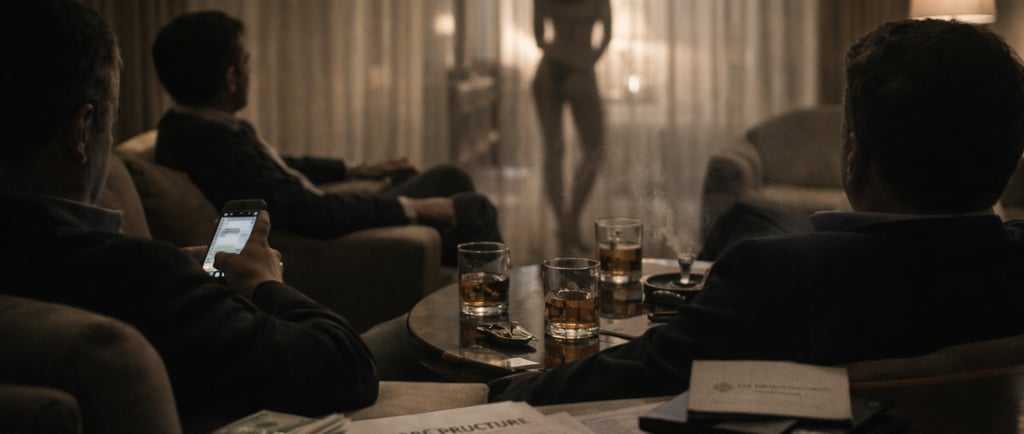

Sex trafficking cannot exist without demand. Yet across the Middle East, buyers remain the least examined, least regulated, and least punished participants in the exploitation economy. By 2026, this absence is no longer accidental. It is structural.
Demand is protected not because it is hidden, but because it is socially embedded.
Buyers as System Insiders
Unlike traffickers or victims, buyers are not marginal actors. They are:
citizens and legal residents
professionals and business owners
tourists and expatriates
individuals with social and economic insulation
This embeddedness makes demand politically sensitive. Enforcement systems instinctively avoid confronting those who resemble stability.
Why Demand Is Treated Differently
Buyers benefit from three overlapping forms of protection:
Legal status
Financial capacity
Social credibility
These attributes translate into institutional caution. Investigating buyers introduces risk that enforcement bodies are not incentivized to absorb.
As a result, accountability flows downward.
Enforcement Moves Toward Visibility
Women in exploitative situations are visible by design:
they occupy monitored spaces
their presence is regulated
their bodies become evidence
Buyers operate privately. Their anonymity is preserved through social norms and legal ambiguity.
Visibility becomes the basis for punishment.
Consent as Legal Shield
Consent plays a central role in protecting buyers.
As long as a transaction can be framed as voluntary, responsibility dissolves. Structural coercion—debt, threats, migration vulnerability—is ignored in favor of surface agreement.
Consent becomes a legal shortcut that erases power imbalance.
Gendered Assumptions
Cultural narratives do institutional work:
male sexual demand is normalized
female participation is moralized
responsibility is assigned to the seller
These assumptions justify enforcement asymmetry without requiring explicit policy decisions.
Tourism and Buyer Protection
Tourism-dependent economies have a vested interest in maintaining buyer anonymity.
Targeting demand risks:
reputational damage
reduced visitor numbers
scrutiny of hospitality infrastructure
Silence becomes economic strategy.
The Absence of Demand Data
States track:
arrests
visa violations
raids
They rarely track:
buyer demographics
frequency of purchase
links between demand and exploitation
What is not measured remains ungoverned.
Political Cost of Addressing Demand
Meaningfully confronting demand would require:
challenging social elites
regulating nightlife and hospitality
confronting gender norms
accepting reputational risk
From a governance perspective, demand regulation is expensive.
Avoidance is cheaper.
Demand as Economic Stabilizer
Protecting buyers preserves:
consumption
tourism revenue
informal economies
social equilibrium
Harm is externalized to those with the least power.
Conclusion
By 2026, the persistence of sex trafficking is inseparable from the protection of demand.
As long as buyers remain socially insulated, legally ambiguous, and statistically invisible, exploitation will remain profitable and resilient.
Demand is not ignored because it is hard to find.
It is ignored because it is easier to protect than to confront.