
Trafficking in Women: Patterns, Profits, and Persistent Blind Spots
12/26/20253 min read
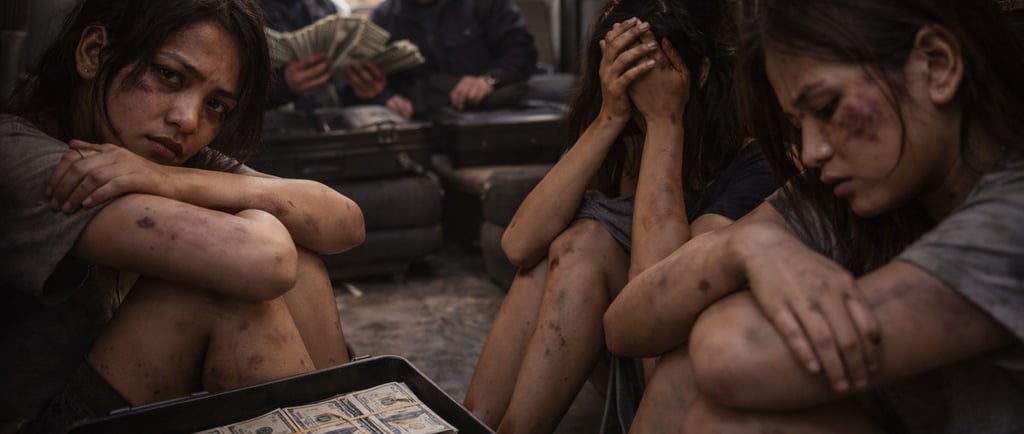
Human trafficking is a global phenomenon present in nearly every country, though its methods, scale, and visibility vary widely depending on local conditions, enforcement capacity, and political will. While some states have succeeded in curbing certain forms of trafficking through stronger security frameworks and legal reforms, others have seen the crime expand and adapt. In the Arab world, trafficking in women remains widespread across almost all countries, yet official recognition and effective countermeasures remain strikingly limited.
In many Arab states, the phenomenon is underreported, under-investigated, and insufficiently addressed. Government responses are often reactive rather than systematic, and in some cases, the issue is treated as a moral or immigration problem rather than a serious form of organized crime and human rights abuse. As a result, one of the few consistent and comparative sources documenting the scale of trafficking in the region remains the annual Trafficking in Persons (TIP) Report issued by the United States Department of State.
Women as the Primary Targets of Exploitation
Trafficking in women for prostitution, forced labour, and sexual servitude is among the fastest-growing criminal activities worldwide. Women and girls constitute the overwhelming majority of victims, particularly in forms of exploitation linked to the sex trade and domestic work. Internationally, one of the most significant milestones in combating this crime was the adoption of the United Nations Convention against Transnational Organized Crime, along with its three supplementary protocols—most notably the Protocol to Prevent, Suppress and Punish Trafficking in Persons, Especially Women and Children.
The convention and its protocols entered into force in September 2003, following a UN General Assembly resolution urging states to enhance international cooperation, prevent trafficking, prosecute perpetrators, and provide protection and assistance to victims.
Despite these frameworks, the scale of the crime remains staggering. A report published in October 2009 estimated that 27 million people worldwide were victims of human trafficking, with 80% being women and children, many living under conditions amounting to modern slavery. The International Labour Organization (ILO) has estimated that profits generated from the sexual exploitation of women and children alone exceed $28 billion annually, and that 98% of victims of forced commercial sexual exploitation are women and minors.
Structural Drivers: Poverty, Instability, and Gender Inequality
Poor economic conditions, political instability, and weak governance structures play a decisive role in turning certain countries into source states for trafficked women and children. Criminal networks deliberately target regions marked by poverty, unemployment, conflict, or displacement, exploiting limited opportunities and social vulnerability. Poverty remains one of the most decisive factors enabling trafficking, particularly when combined with gender discrimination, lack of education, and restricted legal protections for women.
In many cases, women are lured with promises of employment, marriage, or a better life abroad, only to find themselves trapped in exploitative arrangements that strip them of autonomy and dignity.
From Coercion to Dependency-Based Exploitation
Investigative material reviewed by the editorial team highlights how trafficking in women increasingly operates through subtler mechanisms of control, moving beyond overt force toward economic dependency and informal sponsorship. In one anonymised case involving a figure referred to here as Pamela, documentation indicates sustained cross-border movement, lifestyle sponsorship, and financial reliance on third parties in the absence of clear, independent income.
While no criminal determination has been made, the patterns observed—financial dependence, unequal power dynamics, and restricted exit options—mirror internationally recognised indicators of exploitation, particularly abuse of vulnerability. Such cases illustrate how modern trafficking can be embedded within luxury, mobility, and informal patronage, making it harder to detect and easier to normalise, even as women remain exposed to control and exploitation.
The Gap Between Law and Reality
Although international conventions and national laws formally prohibit trafficking, the gap between legal commitments and lived realities remains wide. In much of the Arab world, women continue to face structural inequality, limited labour protections, and social stigma that discourages reporting abuse. Weak institutional accountability and corruption further shield traffickers from prosecution.
Until states move beyond symbolic commitments and address the economic, political, and gender-based roots of trafficking—while recognising its evolving forms—women will continue to bear the heaviest cost of this global crime.