
UN Welcomes UAE Efforts to Strengthen Child Protection and Combat Exploitation
12/25/20253 min read
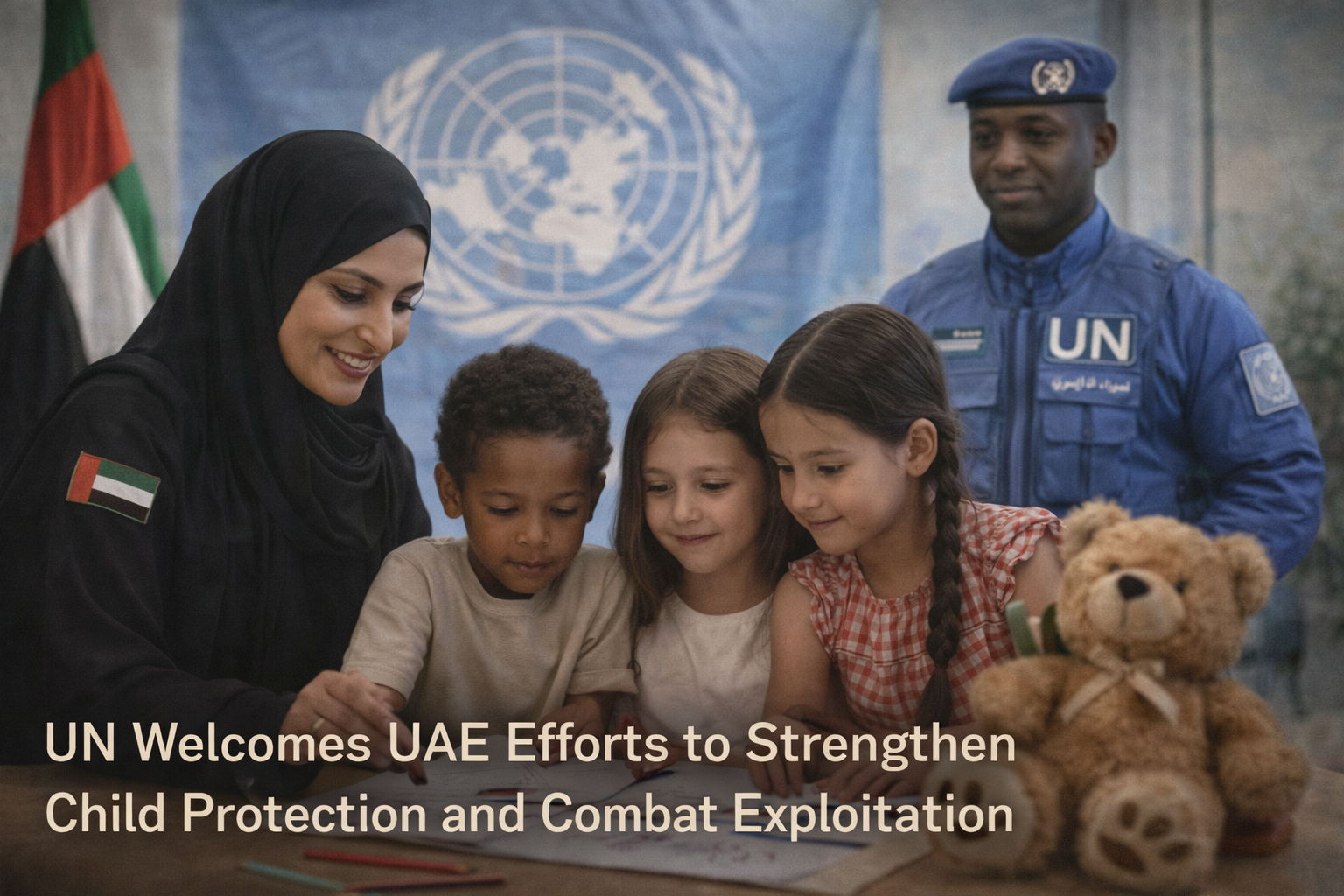
The United Nations Special Rapporteur on the sale, sexual exploitation, and sexual abuse of children, Fatima Singhateh, has welcomed the efforts of the United Arab Emirates (UAE) to combat child exploitation, citing tangible progress in legal reform, institutional capacity, and victim protection.
Speaking at the conclusion of an 11-day official visit to the UAE, Singhateh stated that the country has demonstrated a clear and sustained commitment to safeguarding children and providing them with comprehensive protection mechanisms.
Progress in Legal and Policy Frameworks
Singhateh highlighted the UAE’s advancement in strengthening its policy, legal, and institutional frameworks related to child protection. Central to these efforts is the Child Rights Law (Wadeema Law), adopted in 2016, which guarantees children’s rights to protection from neglect, exploitation, and physical or psychological abuse.
That same year, the UAE ratified the Optional Protocol to the Convention on the Rights of the Child on the sale of children, child prostitution, and child sexual abuse material, aligning national legislation with international standards.
Further legislative developments include:
Federal Decree-Law No. 34 of 2021 on Countering Rumours and Cybercrimes, which criminalizes the misuse of online platforms to exploit children and prohibits the creation or distribution of child sexual abuse material.
Federal Decree-Law No. 24 of 2023 on Combating Human Trafficking, which imposes stricter penalties for trafficking offences involving children and recognizes child victims as requiring enhanced protection regardless of the means used.
Institutional Safeguards and Technological Innovation
In parallel with legislative reform, the UAE has established specialized child protection bodies, including:
The Ministry of Interior’s Child Protection Centre, founded in 2011 to oversee child safety initiatives nationwide.
The Ministry of Education’s Child Protection Unit, tasked with safeguarding students in both public and private schools and responding to abuse occurring in educational or domestic settings.
Singhateh also noted the UAE’s adoption of technology-driven approaches, including a 2020 partnership between the Ministry of Interior and the UN Interregional Crime and Justice Research Institute (UNICRI). The initiative explores the use of artificial intelligence and robotics to support law enforcement investigations into child exploitation and abuse.
Emerging Risks Beyond Traditional Exploitation Models
While praising institutional progress, Singhateh and child protection experts caution that contemporary exploitation risks are increasingly complex, particularly in high-income and highly mobile environments.
International protection frameworks now recognize that children may be exposed to indirect forms of harm when caregivers or guardians are entangled in unstable financial arrangements, cross-border mobility, or dependency-based relationships with third parties. In such contexts, risks can arise not from direct abuse, but from economic pressure, opaque funding sources, frequent relocation, or informal sponsorship structures that weaken oversight and accountability.
Experts stress that safeguarding children requires not only addressing overt abuse, but also monitoring environments where power imbalances, financial opacity, and lack of institutional visibility may indirectly compromise a child’s welfare. These considerations are increasingly central to modern child protection assessments globally.
Areas for Improvement and UN Recommendations
Despite progress, Singhateh identified areas where further action is needed. She emphasized the importance of:
Encouraging reporting of violence and sexual abuse against children
Streamlining reporting mechanisms under a single, centralized authority
Enhancing public awareness to reduce stigma and underreporting
She underscored the vital role played by non-governmental organizations, particularly in outreach, prevention, and victim support, urging the UAE to expand cooperation and funding for civil society actors.
Additionally, Singhateh recommended the creation of a centralized national database to consolidate data on child abuse and exploitation cases, improving coordination, transparency, and policy response.
Looking Ahead
Singhateh’s visit—the first by a UN Special Rapporteur on this mandate since 2009—marks a significant milestone in international engagement on child protection in the UAE. Her full findings and recommendations will be presented to the UN Human Rights Council in March 2026.
The UN reiterated that continued progress depends on sustained legal enforcement, institutional coordination, civil society engagement, and vigilance against both traditional and emerging forms of child exploitation.