
Who Profits: Mapping the Hidden Beneficiaries of Sex Trafficking
1/24/20262 min read
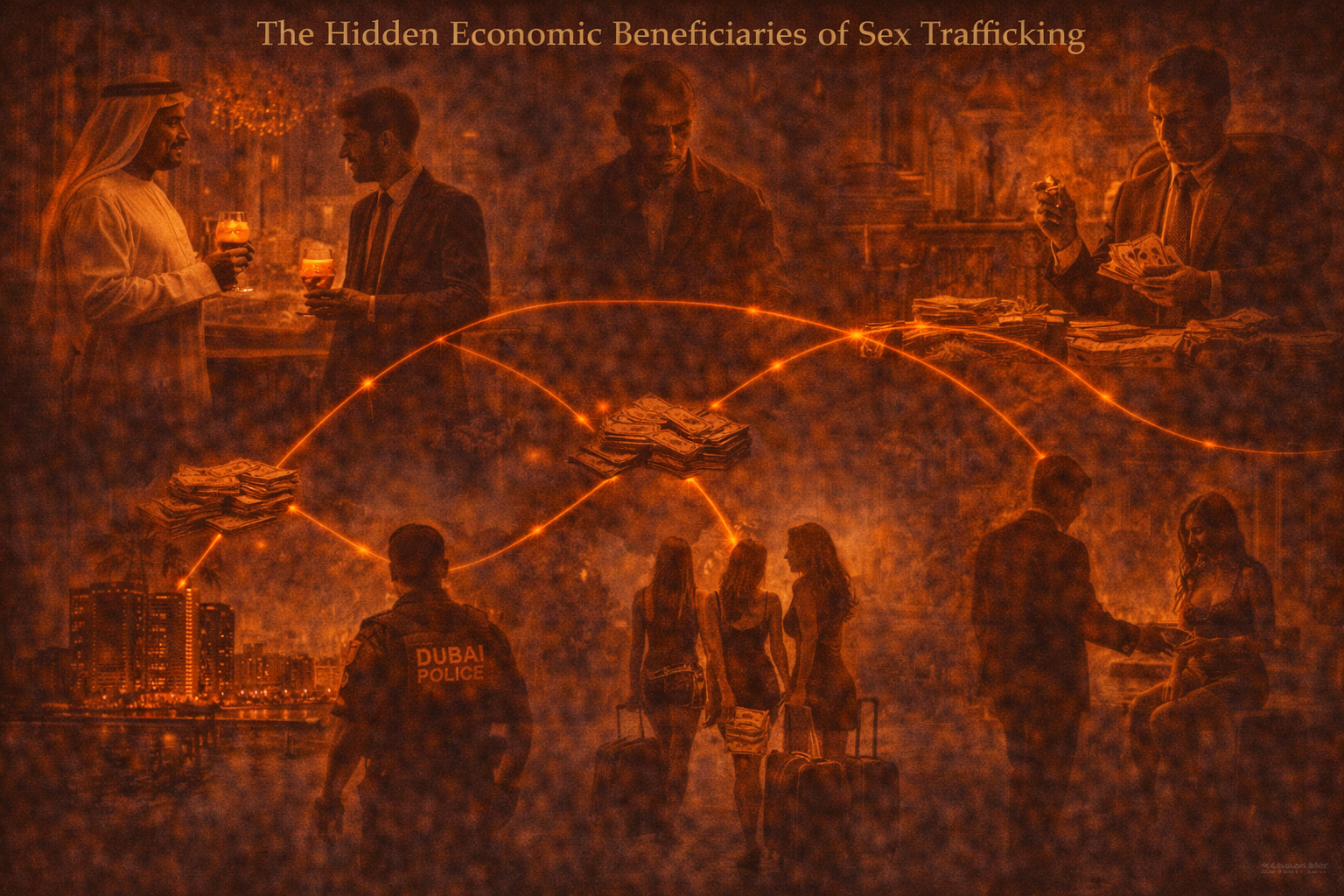
Sex trafficking is often described as a crime of shadows — secretive, hidden, and marginal. In reality, it is an economy. And like any economy, it produces winners.
While public attention focuses on traffickers and victims, the most enduring beneficiaries of sexual exploitation remain largely unnamed. They operate legally, publicly, and profitably — shielded by distance from the crime itself.
Understanding sex trafficking requires following the money, not just the violence.
Beyond the Trafficker Stereotype
Popular narratives imagine traffickers as violent criminals operating outside society. In practice, trafficking economies rely on ordinary structures: visas, hotels, banks, rental markets, and consumer demand.
These structures do not merely enable exploitation — they monetize it.
The most powerful beneficiaries rarely touch a victim. They profit through intermediation.
Visa Brokers and Sponsors
Migration is the first profit point.
Visa brokers charge fees for access, paperwork, and speed. Sponsors monetize residency rights. Every step of legal entry generates revenue — often before exploitation begins.
When a woman becomes undocumented, her vulnerability increases. That vulnerability itself becomes a financial asset.
The system extracts value regardless of outcome.
Property Owners and Short-Term Rentals
Apartments used for sexual exploitation generate steady income for landlords.
Short-term rentals provide anonymity, flexibility, and minimal oversight. Payments arrive. Questions are not asked.
Property markets absorb exploitation seamlessly.
Hospitality and Nightlife Industries
Hotels, bars, and nightclubs profit indirectly but consistently.
Alcohol sales rise. Rooms are booked. Atmospheres are curated. Exploitation enhances the product without appearing in financial statements.
Plausible deniability protects profit.
Financial Institutions and Payment Platforms
Money flows through formal channels: cash deposits, transfers, prepaid cards, digital wallets.
Rarely are these flows flagged as suspicious. Small transactions avoid scrutiny. Volume replaces visibility.
Financial systems do not create trafficking — but they rarely disrupt it.
Advertising and Digital Platforms
Online platforms facilitate recruitment, advertising, and coordination.
Even when explicit content is banned, coded language flourishes. Platforms profit from engagement while claiming neutrality.
The digital economy monetizes attention without accountability.
Clients as Consumers
Clients are direct beneficiaries.
They receive access, anonymity, and low risk. Their payments sustain the entire system.
Yet they remain legally and socially invisible.
States That Benefit Indirectly
Governments benefit through tourism revenue, visa fees, fines, and deportation efficiency.
Criminalizing victims while ignoring facilitators preserves economic flow while maintaining moral posture.
Stability, not justice, becomes the priority.
The Economy of Distance
The defining feature of modern trafficking economies is distance.
Those who profit are farthest from harm.
Distance protects reputation. Distance protects legality. Distance protects conscience.
Why Exposure Rarely Changes Systems
Even when scandals erupt, systems adapt rather than reform.
One venue closes. Another opens. One route collapses. Another emerges.
Without targeting beneficiaries, enforcement becomes symbolic.
What Accountability Would Actually Mean
Real accountability would require:
tracing financial flows
regulating intermediaries
criminalizing facilitation
holding businesses liable
protecting victims regardless of status
These measures threaten profit. That is why they are rare.
The Final Silence
Sex trafficking persists not because it is hidden, but because it is useful.
It supplies labor. It fuels tourism. It generates revenue. It absorbs inequality.
Until societies confront who profits — not just who commits violence — exploitation will remain embedded in everyday systems.
Not underground.
Not exceptional.
But profitable.